The Friendships That Survive a Life Overhaul (And the Ones That Don’t)
I didn't miss a Wednesday morning for twelve years. Then I went back to school, and Wednesdays belonged to a lecture hall instead of a living room full of coffee and diaper bags. Semester after semester, I stayed loosely in touch but stopped showing up. Then one week, my Wednesday opened up. I did the obvious thing. I went back.
This week's post comes with a video too — because some things are easier to say out loud.
The friendships that survive a life transition aren't always the ones you'd guess. Nobody tells you, before you reinvent yourself, that it isn't always a fight that costs you your people. Sometimes you just grow past the size of the room, and you find that out the second you walk back in. The friendships that survive a life transition aren't always the ones you'd guess — and figuring out which ones will is rarely as dramatic as it sounds.
The Group That Raised Us All at Once
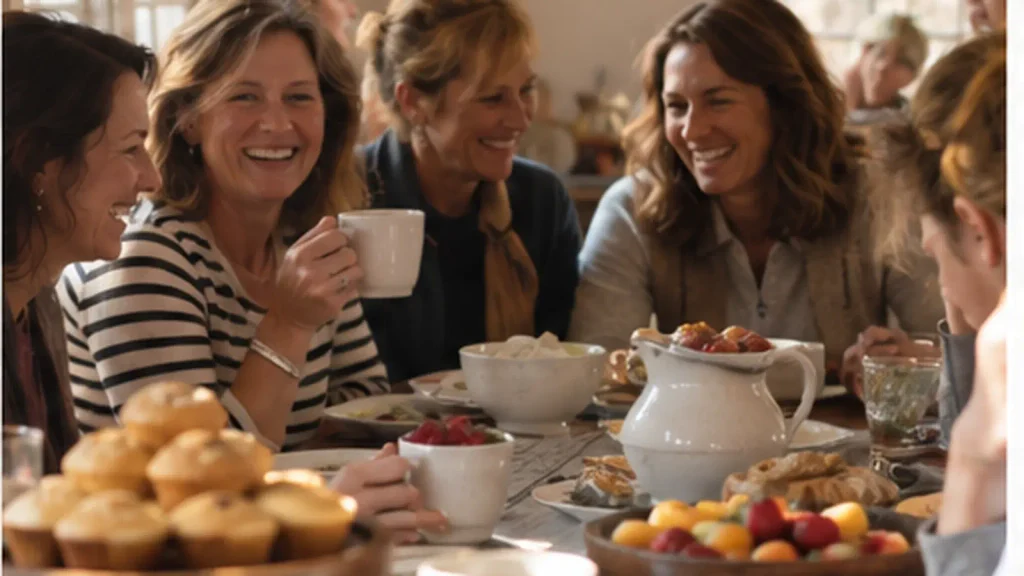
We started as a moms' club before some of us even had kids — some of us pregnant, some of us hoping to be, some of us with a few kids already. At our biggest, we were thirty-five or forty women. We shared pregnancies and the losses in between them, traded mother-in-law stories like currency, and each carried our own specialty — mine was baking, someone else owned Sunday roast the way other people own a signature dish nobody else is allowed to touch. We grew up in that room. Not just our kids. Us.

The Wednesday Nothing Had Technically Changed
By the time I finally had a free Wednesday, the group had shifted without me too. One member could no longer manage the stairs to our old church meeting room, so for a while we moved from house to house, and eventually settled into a private room behind a restaurant — smaller, and nowhere near as intimate. The “oh, how exciting to see you” was warm and completely real. And underneath it, I felt the distance arrive almost instantly.
Everything on the surface still matched. Our kids were still roughly the same ages. I still knew everyone's youngest by name. But there was one piece of me that no longer lined up with the room, and it turned out to be the piece that mattered most: I wasn't a stay-at-home mom anymore.
I no longer carried a diaper bag. I no longer rushed back for pickup. I was a free agent, and some of them never wanted that for themselves.
We'd gone from thirty-five women trading off who brought breakfast that week — everybody a little bit showing off — to ten of us buying our own coffee from a menu instead of sharing what somebody baked at six that morning. I tried it two or three more times before I understood the chapter had closed. Not because anyone closed it on me. Because I'd already walked out of it, one missed Wednesday at a time.
If you're in the middle of figuring out which parts of your old life still fit and which ones you've outgrown, our free reflection, Where Are You In Your Becoming?, is built for exactly that in-between. Eight questions, about two minutes, and a reading path matched to right where you actually are.
What Friendships That Survive a Life Transition Actually Look Like
I want to be careful here, because it would be easy to turn this into a story about a group of women who weren't kind, and that isn't true. They were exactly as kind as they'd always been. What changed wasn't their warmth — it was the shape of the thing we used to share, and I no longer fit inside it the same way.
Research on adult friendship backs this up: major life transitions are one of the most common triggers for friendship loss and reorganization — not because anyone did anything wrong, but because a friendship built around one season of life doesn't automatically survive the next one. And the same patterns that show up everywhere else in a reinvention — over-functioning, people-pleasing, the guilt of wanting something new — show up in friend groups too. I clung to two or three more attempts partly out of genuine affection, and partly because letting a friendship end felt like admitting failure.
The friendships that survive a life transition, in my experience, aren't the ones that resist change the hardest. They're the ones that don't need you to stay the same size to stay close. A few of those women and I are still Facebook-official — a comment here, a “thinking of you” there — and it's enough. It's not a loss. It's a friendship that did exactly what it was built to do, for exactly as long as it needed to.

If you've got a group like mine — one that raised you through a season and then let you go without a fight — you don't have to grieve it to honor it. You're allowed to be grateful for what it was and honest about what it no longer is. If that ache feels closer to betrayal than gratitude right now, that's worth sitting with too — it usually just means you cared. And if you're in the middle of wondering whether you changed or the room did, come sit with us in the Thrive Hive. Most of the women there have stood right where you're standing.
You're Not the Only One Asking
Why do friendships change during a big life transition?
Most friendships form around a shared season of life — new motherhood, a certain job, a certain neighborhood. When you move through a transition and that season ends for you before it ends for everyone else, the friendship often has to shift shape or step back, even when nobody's done anything wrong.
Is it normal to feel like an outsider in an old friend group after a life change?
Completely normal, and more common than most people admit. You can still love the people and feel the distance at the same time — that contradiction doesn't mean the friendship failed. It usually just means it's finishing a chapter.
How do you know when a friendship has run its natural course?
One honest sign is effort without return — you keep reaching, and the connection keeps feeling thinner anyway. Another is realizing you've already stopped missing the version of the friendship you had, and you're only grieving the idea of it.
Is it okay to stay loosely in touch instead of staying close?
Yes. A lighter connection isn't a failed friendship, it's a different one. Plenty of relationships settle into an occasional check-in and stay genuinely warm there for years.
What if I feel guilty about drifting away from old friends?
Guilt usually means you cared, not that you did something wrong. Growing in a different direction than a friend group isn't a betrayal of the people in it — it's just what happens when a life keeps moving and a group, understandably, can't always move at the exact same pace.
Free Download
Get the Rise & Reset Journal
FreePlus weekly stories, resources, and gentle guidance for life's toughest transitions.
✦ Yes, Send Me the Journal + Weekly SupportUnsubscribe anytime. Your inbox deserves kindness too.