

Making Friends After 50 When Life Stopped Handing Them to You
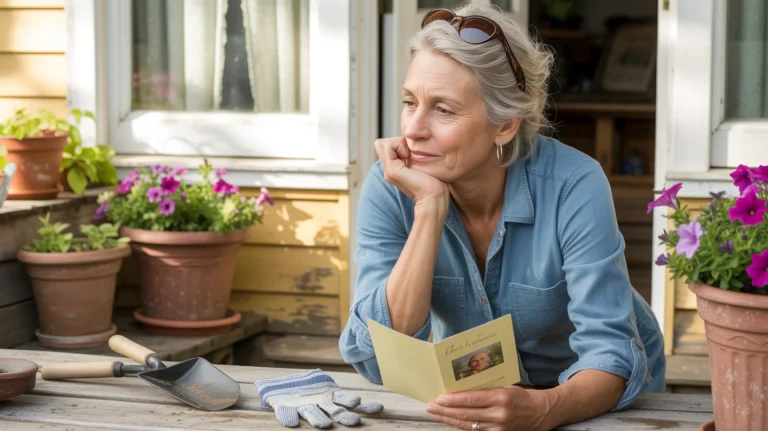
About twenty years ago, around the time I went back to school, a woman I had just met invited me to a local museum park. She had free tickets, which she mentioned almost apologetically, as though the invitation needed an excuse, and we spent a long afternoon wandering the grounds and talking the way you do when you’re discovering that someone is interesting. I went home certain I had made a friend. After that we talked every week, trading pieces of our lives, and I remember thinking that making friends after 50 was going to be easier than anyone had led me to believe.
Then graduate school asked more of me, and after that, work did. Nobody decided anything. The meetups got shorter and further apart until they weren’t on the calendar at all, and the friendship faded the way so many of ours do, with no argument and no ending, just a long run of ordinary weeks in which we were both busy.
A few months ago she reached out, and we made a plan. I canceled because I wasn’t feeling well. We rescheduled, and then my husband had a motorcycle accident, and everything else took a back seat, including her. I canceled again, this time by voicemail, and I haven’t called her since. It has been long enough now that every extra day makes the call harder to make, and I’m telling you up front because this post is about making friends, and I’d be a poor guide to the subject if I pretended I had mastered it.
This week’s post comes with a video too — because some things are easier to say out loud.
Why Making Friends After 50 Feels So Different
For a long stretch of our lives, friends simply arrived. They came with the job, the playground, the neighborhood and the school pickup line, and all we had to do was show up and be reasonably pleasant. Then the kids grew up, the job ended or changed, and the deliveries stopped without so much as a notice. What’s left is a skill most of us haven’t practiced in decades, which is choosing someone on purpose and letting them know.
In this week’s video I told you about a classroom at eight in the morning, where two women smiled at me, I sat down beside them, and a group of us who still call ourselves the SOBs (smart old bags, said with enormous affection) became friends over a single semester. That story is true and I love it. What I didn’t say in the video is that a classroom is an unusually easy place to make friends, because it hands you everything at once: the same room, a shared reason to be there, and a built-in excuse to see each other again. Most of adult life stopped offering that, which is a very different problem from being hard to like.

What the Research Says About How Long It Takes
Jeffrey Hall, a communication researcher at the University of Kansas, set out to answer a question many of us have wondered about, which is how many hours it actually takes to make a friend. His study, published in the Journal of Social and Personal Relationships, put the numbers at roughly 50 hours together to move from acquaintance to casual friend, about 90 hours to become a friend, and more than 200 hours to become a close one. The hours that counted most were the relaxed ones, hanging out and talking and joking around, while time spent working side by side counted for far less.
Read that way, my own story makes a great deal of sense. I don’t know how many hours the museum-park friend and I logged, but I know the weekly talks were adding them up, and I know exactly when they stopped adding. A friendship isn’t a feeling you either have or you don’t. It’s a balance that grows when you spend relaxed time together and stalls when you can’t, and nobody has to do anything wrong for it to stall. It also explains why my semester with the SOBs worked so well, since sitting together and catching up between classes is a remarkably efficient way to log hours. If your own friendships have gone thin, it may be that the hours stopped, not that you did anything to cause it.
If you’re not sure whether you’re missing one particular person or just the feeling of having people around, our free reflection Where Are You In Your Becoming? is a good place to land. It’s eight questions, it takes about two minutes, there are no wrong answers, and it points you toward what might help next. You don’t have to have it figured out to belong here.

The Friend I Haven’t Called
I’ve told you what happened, but not what it feels like, which is a little ridiculous, because the whole situation is two canceled plans and an unreturned call and I’ve been treating it like a state secret. The truth is that I’m embarrassed. The longer I wait, the bigger the embarrassment gets, and the bigger it gets, the less I want to reach out, which is an impressively efficient little loop.
The therapist in me can’t leave it alone, though. I’ve seen this in my practice and in our community: embarrassment is often the loudest feeling in the room without being the only one. So I’ve been asking what else might be sitting underneath it. Maybe it’s shame about canceling twice. Maybe it’s that calling means explaining the accident, and I’m not sure I want to. Maybe it’s fear that the friendship has cooled and a lukewarm hello would confirm it. And maybe, and this is the one I’ve been least willing to say out loud, it’s ambivalence. I live on my phone and she has never been a texter, so even our ways of staying in touch were different, and a friendship that only works when one person does all the adapting can wear thin without anyone noticing.
I don’t know which of those is true. I do know that wanting to reach out and wanting the friendship are not always the same thing, and I’ve been treating them as one question.
Wanting to reach out and wanting the friendship are not always the same thing.
Three Questions for a Friendship That Faded
I’m not going to hand you a plan, because I don’t have one and I’d rather not pretend. These are the three questions I’ve been sitting with, and you may find that one of them is yours.
Do I miss her, or the season of life we shared? Sometimes the person is the point and sometimes she’s the face of a time we loved, and both are worth knowing. A yes to missing her is worth knowing even if you never act on it.
What exactly am I avoiding: the call, the explanation, or the answer? These feel like one dread, but they’re three different ones, and the one you name tends to shrink a little.
If it were already done and the reply were warm, would the dread lift? If it would, embarrassment was doing most of the talking. If something heavy stays behind, that’s information too, and it may be telling you something about the friendship itself.
And if the honest answer is that the friendship did its job and ran its course, that’s allowed. Not every friendship that fades is a loss waiting to be repaired. Some are a lovely afternoon at a museum park, and a lovely season is not a failure.

Where This Leaves Me, and Maybe You
I’m leaving this one open, partly because it is open and partly because I suspect many of us are carrying a friend we haven’t called. Last week I wrote about who gets a seat at your table now, and this week’s question is the sequel: what we do when someone has drifted away from it. If it’s the drifting itself you’re thinking about, this post on the friendships that survive a life overhaul and the ones that don’t may feel like company, and if you’ve been waiting for permission to try something new at all, this one on giving yourself permission to start over is a good companion.
And if you’d like to practice with women who understand all of it, there’s a room waiting in The Thrive Hive, our free Facebook group. It’s full of women who have also canceled twice and meant to call back, nobody is keeping score, and there is always another chair. I’d love to hear from you in the comments: is there someone you’ve been meaning to reach back out to, and what’s standing in the way?
Questions That Come Up When Friends Stop Arriving on Their Own
You’re not the only one asking.
Is it harder to make friends after 50?
Often it is, though not because anything is wrong with you. Work, school and parenting used to put us in regular contact with people without any effort, and those routines shrink as life changes. Friendship still grows the way it always did, through relaxed time together, but now the time has to be arranged on purpose.
How long does it take to make a friend as an adult?
Research from the University of Kansas found it takes roughly 50 hours together to become a casual friend, about 90 hours to become a friend, and more than 200 hours to become a close friend. The relaxed hours count most, such as talking and hanging out, while time spent working together counts for less. Those numbers describe an average, not a deadline.
Where can I meet people when I’m not in school or working?
Look for somewhere you can show up repeatedly with the same people, because repetition is what builds the hours. That could be a class, a volunteer shift, a walking group, a library program or an online community like The Thrive Hive. The setting matters less than seeing the same faces more than once.
What if I tried to make a friend and it didn’t work?
That happens to nearly everyone, and it usually says more about timing than about you. People get busy, shy or distracted for reasons that have nothing to do with the person smiling at them. You’re allowed to try again with someone else, in another room, on a better day.
Is it okay to let a friendship fade?
Yes. Some friendships belong to a season of life, and when the season ends they can fade without anyone doing anything wrong. If you miss the person, a call or a card may be worth it, and if you mostly miss the season, it’s okay to be grateful for it and let it be.
How do I reconnect with a friend after canceling plans more than once?
A short, simple note is usually enough: say you’re sorry about the missed plans, say you’ve been thinking of her, and say you’d love to catch up. You don’t owe a full explanation, and people are often more glad to hear from us than we fear. Use whatever channel that friend actually likes, whether that’s a call, a card or a text.
Free Download
Get the Rise & Reset Journal
FreePlus weekly stories, resources, and gentle guidance for life's toughest transitions.
✦ Yes, Send Me the Journal + Weekly SupportUnsubscribe anytime. Your inbox deserves kindness too.




One Comment