

You Asked: How Do I Find My People After Everything Changed?
A reader sent us this question recently, and it stopped me in my tracks. Not because it was surprising — but because it felt like the question so many of us have been silently carrying ever since the world turned sideways.
“I lost my social circle during Covid,” she wrote. “I also lost my job. When things started to open back up, I looked around and realized: the people I used to call my people? They weren’t there anymore. How do I even start to find my community again?”
If you’ve ever wondered how to find community after life change, you are in very good company. And if that change arrived the way it did for so many of us — through a pandemic that rewired everything we thought we knew about connection, work, and belonging — then this one is especially for you— because learning how to find community after a life change is something nobody prepares us for.
What Happened to Our Social Worlds During Covid
Let’s start by being honest about something we don’t talk about enough: the pandemic didn’t just pause social life. For many of us, it ended versions of it that we hadn’t realized were already fragile.
Friendships that had been held together by proximity — office hallways, school pickups, the same Tuesday yoga class — simply faded when the proximity disappeared. Relationships that felt solid turned out to have been built mostly on habit and convenience. That’s not a failure of love. It’s just what happens when the scaffolding suddenly comes down.
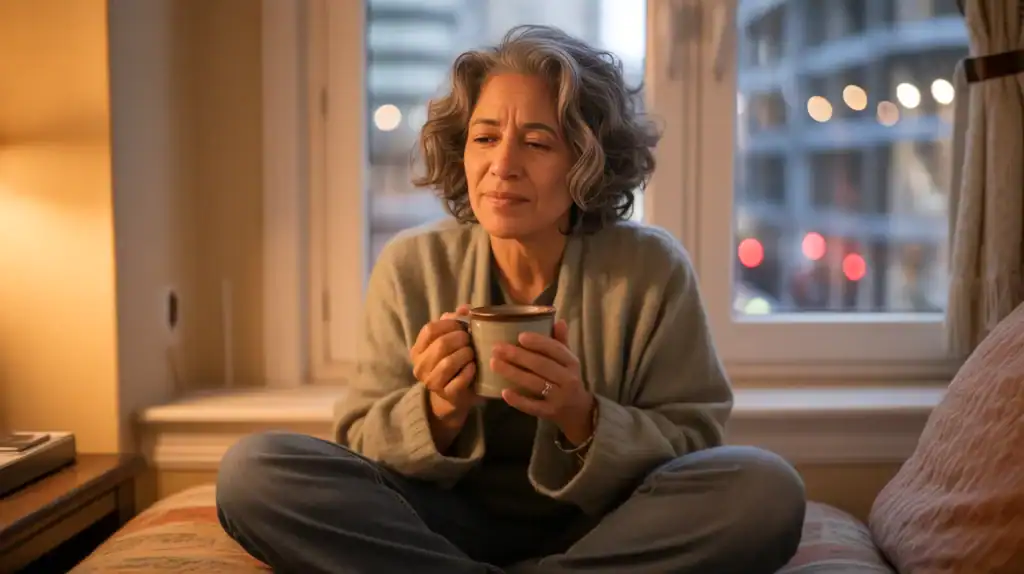
And then there was job loss. Losing a job isn’t only about income (though of course it’s absolutely that). It’s also about losing a built-in community: the coworkers who knew your name, the rhythms that structured your week, the small moments of human connection that happened almost by accident in a shared space. When that disappears too, the isolation can feel staggering.
Research from the American Psychological Association has consistently found that social connection is one of the strongest predictors of emotional resilience. What we lost during those years wasn’t small. And giving ourselves permission to acknowledge that loss is the first step toward building something new.
Why Finding Your People After a Life Change Feels So Hard
Here’s the thing about adult friendships: they don’t grow the way they did when we were younger. In childhood and young adulthood, proximity and repetition do most of the work. You’re thrown together in dorms, at first jobs, in new cities, and friendships kind of just… happen.

After a major life change, that effortless formula stops working. Making new connections requires intentionality. And intentionality, when you’re already depleted, already grieving a version of your life that has ended, can feel impossibly heavy.
There’s also something else that doesn’t get said often enough: starting over socially can feel embarrassing. Like you’re the only one. Like everyone else has their people and you’re the odd one out. That feeling is almost universally shared — and almost never talked about. Which makes the isolation even lonelier.
You’re not behind. You’re not broken. You’re just in the messy middle of transition, and that middle is exactly where new things can begin.
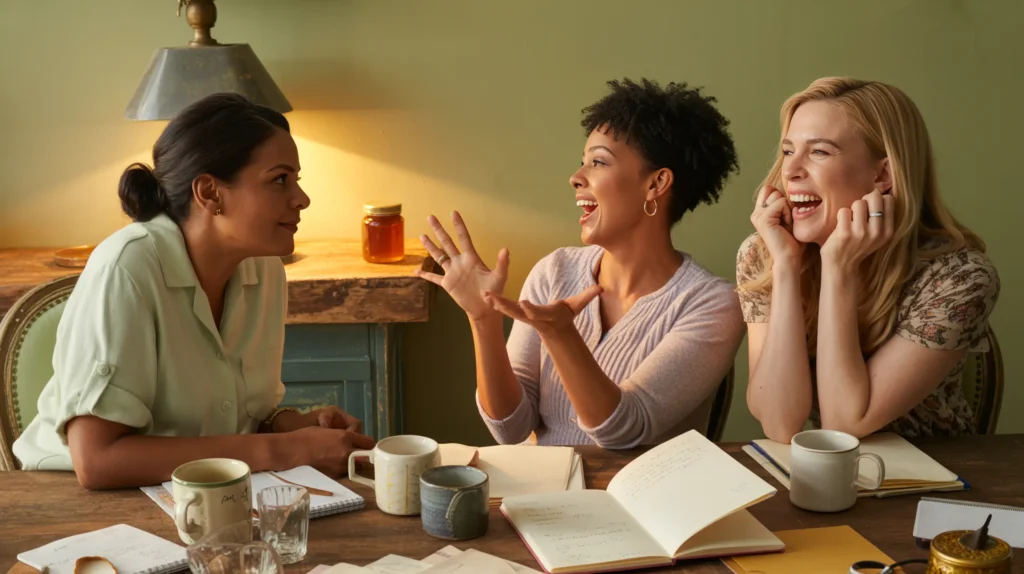
How to Find Community After Life Change: Where to Start
There’s no single path back to belonging. But there are some things that have helped — things we’ve heard from women in this community who have walked through exactly what you’re describing.
Start with what you care about, not with who you want to meet
It sounds counterintuitive, but the best way to find your people is usually not to go looking for people. It’s to go looking for the thing you love. A book club, a walking group, a cooking class, a volunteer shift at an organization that matters to you. When you show up somewhere in service of something you genuinely care about, the conversations start themselves. And the connections that grow from shared purpose tend to go deeper, faster.
Lower the stakes on the first hello
The second step in how to find community after life change is simply lowering the stakes on the first hello. We can build up the idea of “making friends” into something so weighty that we never take the first step. One reframe that helps: you’re not trying to find your best friend today. You’re just trying to have one interesting conversation. That’s it. One genuine exchange. You can do that.
Consider online communities as a real starting place
This feels worth naming explicitly: online communities are not a consolation prize for “real” connection. For many women navigating life transitions, they’re actually an incredibly powerful starting point. You can find people who understand exactly what you’re going through, at any hour, without the pressure of real-time performance. Some of the most meaningful friendships begin with a comment thread.
Give it more time than feels reasonable
One of the most important things to understand about how to find community after life change is that it takes longer than we wish — and that's completely okay. Research on friendship formation suggests it takes somewhere around 50 hours of interaction to move from acquaintance to casual friend, and around 200 hours to develop a close friendship. That’s not a discouraging number — it’s a reassuring one. It means the awkward early stages are not a sign you’re doing it wrong. They’re just the beginning. Keep showing up.
What If You’ve Changed Too Much for the Old Connections?
This is the part of the question that often goes unasked. Sometimes it isn’t that our people disappeared. Sometimes we realize — after a major life upheaval, after a pandemic, after job loss and reinvention — that we’ve grown into someone the old connections don’t quite fit anymore.
That can feel disorienting. Even a little sad. It’s okay for it to be both of those things.
What it also means is that you have an opportunity to find community that fits who you are now, not who you were before. That’s not starting over. That’s starting more honestly. And it’s worth it.
You Don’t Have to Find All Your People at Once
Community doesn’t have to be a group. It can be one person. One neighbor who waves from across the street and gradually becomes someone you have coffee with. One online friend who just gets it. One class where you start recognizing the same faces.
The longing for belonging can make us feel like we need a whole village to materialize at once. We don’t. We need a thread. And threads, when we follow them, have a way of weaving something larger than we could have planned. You're not starting over. You're learning how to find community after a life change that asked a lot of you. That's different. And it's worth it.
You’ve been through something real. Something that changed the landscape of your daily life in ways big and small. The fact that you’re asking this question — that you’re still reaching toward connection — says everything about your resilience.
The people who are meant to know you are still out there. And you are still becoming someone worth knowing.
Questions I Hear All the Time About Finding Community After Everything Changed
Is it normal to lose friends after a major life change like the pandemic?
Completely normal, and more common than people admit. Many friendships are maintained through routine and proximity. When a major disruption removes those structures, friendships can fade even between people who genuinely care for each other. It doesn’t mean the friendship wasn’t real. It means the container it lived in changed.
How do I find community after job loss when I’m not sure who I even am right now?
You don’t have to have yourself figured out to start connecting with people. In fact, showing up in the uncertain middle, honest about the fact that you’re rebuilding, can create some of the most authentic connections. People recognize courage. They’re drawn to honesty. You don’t need an elevator pitch for your life. You just need to show up.
What if I’m introverted and socializing feels exhausting?
Then honor that, and build in recovery time. Meaningful connection doesn’t require you to become someone different. It requires you to find the kinds of connection that energize rather than drain you. Smaller groups, one-on-one conversations, shared activities rather than cocktail parties. Know your own rhythms and build from there.
How long does it take to find real community after a life change?
Longer than we wish it did, and shorter than it feels like it will take when you’re in the thick of it. Most research suggests meaningful friendships develop over months, not weeks. The early stages always feel awkward. That’s not a sign to stop — it’s a sign you’re in the beginning.
Are online communities a legitimate way to find connection?
Yes. Full stop. For women navigating life transitions in particular, online communities can be genuinely life-changing. They offer access to people who understand your specific experience, without geographic limits, at any hour. Some of the most meaningful connections start online and grow from there.
We’re building something here at Tools to Thrive Today that we hope feels like exactly what we’re talking about: a place where people who are starting, re-starting, and figuring it out can find each other. You’re not too late. You’re just getting started.
If this resonated with you, we’d love to hear your story. Drop a comment below, or come find us in the community. Your people are closer than you think. 🌿
Free Download
Get the Rise & Reset Journal
FreePlus weekly stories, resources, and gentle guidance for life's toughest transitions.
✦ Yes, Send Me the Journal + Weekly SupportUnsubscribe anytime. Your inbox deserves kindness too.



One Comment