The Beginner Thing Nobody Warns You About After 50
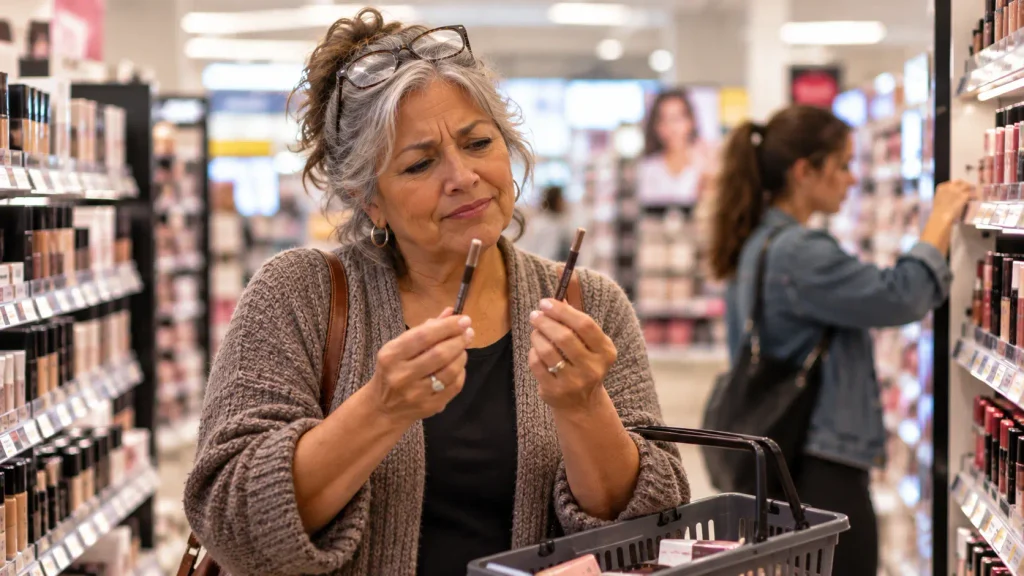
I was standing in the makeup aisle at CVS a few weeks ago, holding two nearly identical brow pencils, when a woman about my daughter's age reached past me for a lipstick and said, “Oh, that one's great, it's basically foolproof.” She meant it kindly. She also had no idea she'd just described the exact opposite of my experience with a brow pencil. Learning something new later in life, it turns out, comes with an embarrassment nobody prepares you for.
Nothing about it had been foolproof. I'd been standing there for ten minutes, failing a task that, judging by the confident, uncluttered way everyone around me was shopping, every other woman in that store had mastered decades ago.
This week's post comes with a video too, because some things are easier to say out loud.
The Tutorials Aren't Built for My Face
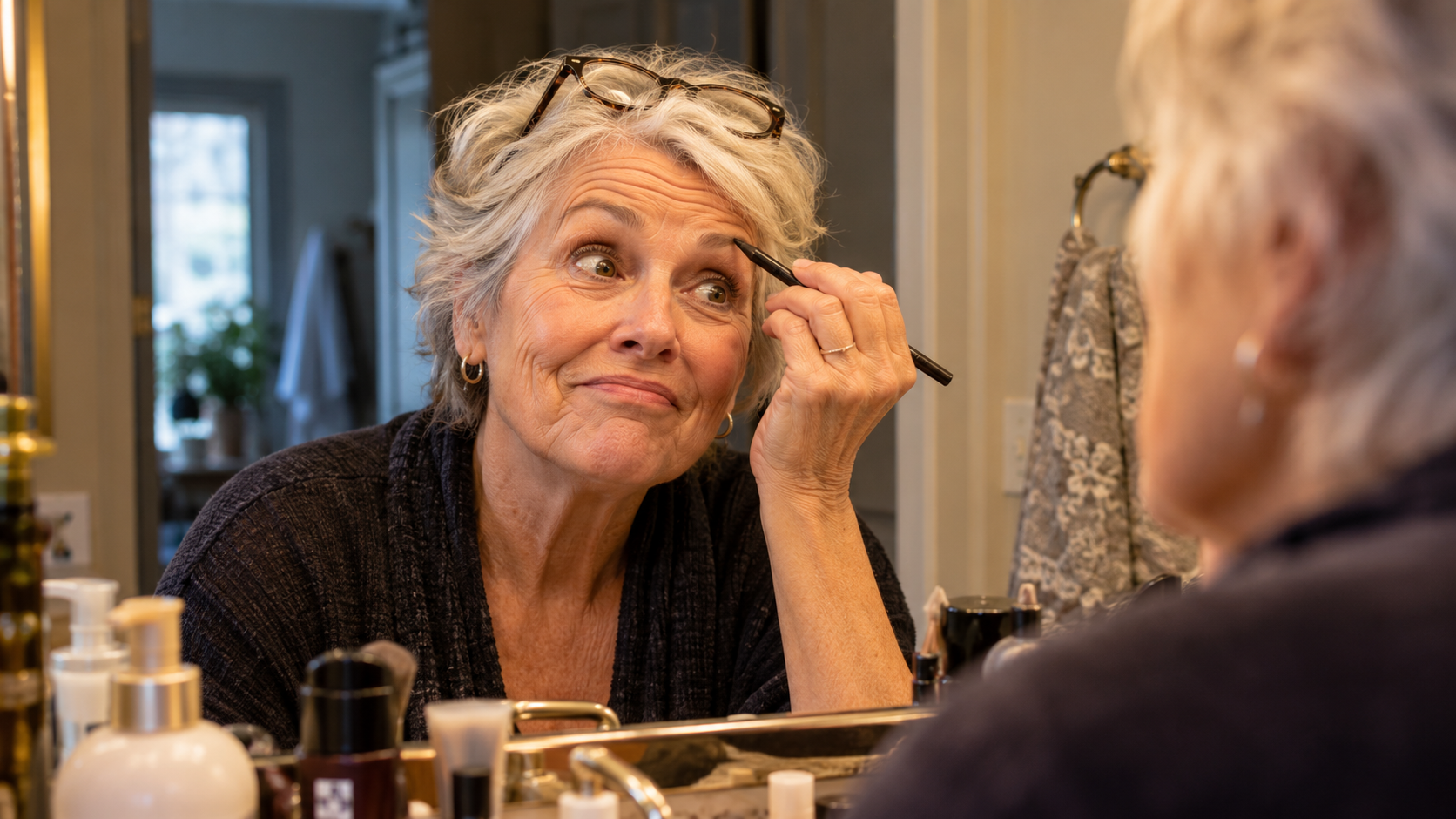
I never really wore makeup when I was younger. A little bit here and there, just enough to put a small polish on things before I walked out the door. It was never a skill I built. It was just a thing I skipped past.
As I've gotten older, that's changed. Not because I woke up wanting a whole new look, but because I started noticing things I'd never really looked at before. My eyebrows had a shape I didn't know was there. My lashes had all but disappeared. My skin tone wasn't as even as it used to be. None of that is a crisis. It's just what happens. But I realized I didn't actually know how to work with any of it.
So I started learning. Slowly, and more than a little clumsily, standing in front of a mirror trying to figure out where things go and why. If you've ever gone looking for help with this online, you know most of it is aimed at twenty-five-year-olds. Contouring tutorials, ten-step routines, all of it built for a face that isn't dealing with what mine is dealing with. I had to sort through a lot of noise to find the handful of things that actually applied to me.
And I'm still learning. I'm not trying to look like someone else, or turn back the clock, or become a different version of myself. I'm just trying to bring out what's already there, in a way that still looks like me when I catch my reflection in a store window.
Learning Something New Later in Life: Being Caught vs. Paying Attention
Here's the catch about learning something like this at seventy-two: you're doing it in front of an audience that already assumes you know how. Nobody hands a seventy-two-year-old woman a beginner's tutorial. Somewhere along the way, you're just supposed to have this figured out. Eyebrows, skincare, all of it. Like it was covered in some class you missed.
And when you haven't figured it out, and you're standing there at this age holding a brush you don't know how to use, it can feel less like learning something new and more like being caught. Like admitting you missed something everyone else already knows.
But that's not actually what's happening. What's happening is you're paying attention to yourself in a new way, at a stage of life when a lot of us stop paying attention to ourselves at all.
I've seen this in my practice and in our community more times than I can count, and it's rarely about the actual skill. We get so busy taking care of everyone else, or so used to how we've always done things, that trying something new starts to feel like it needs a good excuse. It doesn't. “I wanted to” has always been reason enough. We just stopped believing it applied to us.
There's real research behind why this particular flavor of embarrassment shows up so reliably in adulthood. One Psychology Today piece put it plainly: “It's hard to be a beginner learning something new. Some people avoid learning new things because they cannot tolerate being ‘bad' at something.” That's not a character flaw. It's just what beginnerhood costs, at any age.
If you're somewhere in the middle of figuring out your own version of this, and you're not entirely sure whether you're avoiding something small out of habit or something bigger out of fear, our free reflection Where Are You In Your Becoming? was built for exactly that. Eight questions, about two minutes, no wrong answers. You don't have to have it figured out to belong here.

Name Your Own Eyebrow Thing
I'd guess a lot of you have your own version of this. Something small you've never quite learned, that you've worked around for years instead of just learning it. Not because it's hard. Because it feels a little embarrassing to be a beginner at something this late, in front of people who might notice.
So here's what I'd ask this week. First, name your version of the eyebrow thing. Something small, not a project, not a life overhaul. Just one thing you've avoided learning because you feel like you should already know it by now.
Second, give yourself permission to be bad at it for a while. Out loud, if you can stand it. Tell someone you're learning it. Don't master it in private and then reveal it later like nothing happened. Let it be visibly new. Another Psychology Today piece offers the alternative to wishing the newness away: “Relish the richness of being a beginner.” That's the part that actually loosens the embarrassment. Not getting good at it faster.
If you want more on why the middle of learning something new tends to feel worse before it feels better, I got into a related version of this in Overcoming Anxiety & Fear of the Unknown After 50, about why confidence never actually shows up before the moment you need it, only after. Worth a read if the brow pencil isn't really your only “thing.”

You Don't Have to Have Mastered It to Belong Here
None of this is really about eyebrows, of course. It's about what happens when we decide a little embarrassment is a fair price for paying attention to ourselves again. Age has never actually put a lock on that door. We just convinced ourselves it had.
I talk more about that idea in Why Starting Now Can Change Your Life Forever and Permission to Start Over, two posts that circle the same idea from different angles: you were never actually disqualified, you just needed someone to say so out loud.
That's it for this week. If you've got your own “should already know this by now” thing, I'd genuinely love to hear it over in the Thrive Hive. We are very good at showing up for each other, and not one of us has this fully figured out either. ☕💚
You're Not the Only One Asking
Why does learning something new feel more embarrassing after 50 than it did when I was younger?
Mostly because the audience changes. As adults, we're surrounded by people who assume competence rather than beginnerhood, so struggling with something new can feel like exposure rather than growth. Psychologically, it's the same discomfort a twenty-five-year-old feels, it's just landing on an assumption nobody made about them.
Is it normal to feel self-conscious trying something new in your 60s or 70s?
Yes, and it's one of the most common feelings people describe in our community. Feeling self-conscious isn't a sign you shouldn't be doing it; it's usually a sign you're doing something that actually matters to you.
How do I get past the fear of being bad at something new?
Naming it out loud to someone tends to help more than practicing in private. Visibly being a beginner, rather than hiding the learning curve, is what actually reduces the embarrassment over time, not skipping ahead to competence.
What's a good first step for learning a new skill later in life?
Pick something small and specific rather than a whole overhaul. One narrow skill, learned badly at first and openly, builds more real confidence than an ambitious plan that never gets started.
Does it matter what the new thing is?
Not really. The value isn't in the specific skill; it's in the act of paying attention to yourself in a new way, at a stage of life when a lot of us have stopped doing that.
Free Download
Get the Rise & Reset Journal
FreePlus weekly stories, resources, and gentle guidance for life's toughest transitions.
✦ Yes, Send Me the Journal + Weekly SupportUnsubscribe anytime. Your inbox deserves kindness too.