Who Am I When Nobody Needs Me.
Rediscovering Yourself in the Middle of Everything
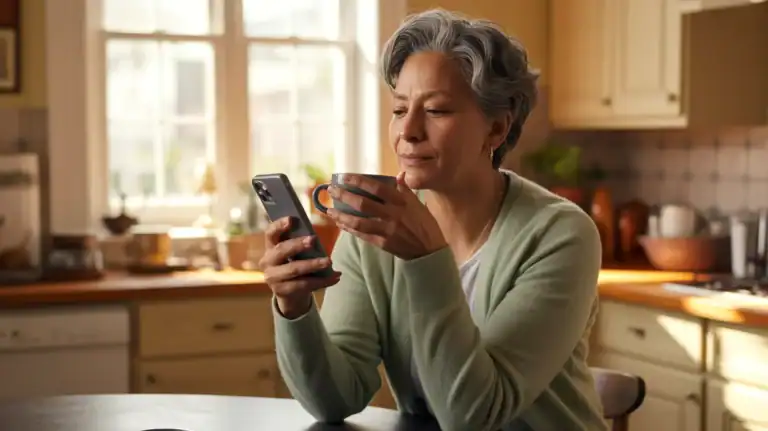
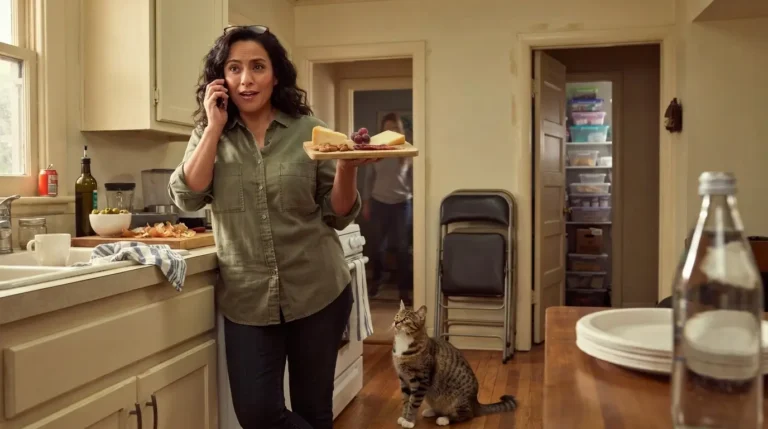
She's standing at the kitchen counter at 6:47 in the morning, already running through a list before her coffee is done. Pick up the prescription before work. Call back the discharge coordinator. Reply to the email from her boss that she didn't get to yesterday. Text her daughter. Figure out what's for dinner. And somewhere in the back of her mind, the thing she never quite says out loud: when was the last time I did something just because I wanted to?
“If you're rediscovering yourself after caregiving, this moment might feel familiar. She's not retired. She's not free. She is, in the truest sense of the phrase, in the thick of it.

And somewhere in the middle of all that doing — the caregiving and the working and the family managing and the never quite sitting down — she's started to wonder: who am I in here? Not the version who shows up for everyone else. The one underneath all that.
Maybe you know her. Maybe you are her.
This isn't a story about life after caregiving. Not exactly. Because for most of us, rediscovering yourself after caregiving doesn't happen in a clean “before and after.” The caregiving seeps in around the edges of an already full life. It layers on top of careers and marriages and kids who still need things and parents who are starting to need different things. It's not a before and after. It's a during.
And the question of who we are — separate from all the roles we hold — doesn't wait politely for us to have the bandwidth to answer it. It starts asking in the middle of the mess.
According to NPR's reporting on caregiver identity theory, psychologists now understand caregiving as a profound identity transition — one that changes how we see ourselves at a fundamental level, not just how we spend our days. Knowing that doesn't make it easier. But it does make the disorientation make sense.
Diane started asking the question at 47.
Her youngest was in middle school, which meant the house was loud and scheduled and constantly in motion. Her mother-in-law was in a nursing home. Her father-in-law had recently passed. Her own mother, a force of nature well into her eighties, was sharp and independent — not yet needing much, but Diane paid attention to her differently now. More carefully. She could see the shape of what might be coming, even if it wasn't here yet.
In the middle of all of it, she went back to school.

There was no perfect moment for it. There never is. Her husband shifted his hours and picked up more of the running around — the hockey practices, the weekend tournaments, the kind of logistics that can eat a person alive if nobody's keeping track. It wasn't seamless. Some weeks it felt like everyone was holding their breath and hoping nothing new would land on the pile.
But Diane kept going, rediscovering herself after caregiving . And slowly, alongside everything else, she was becoming someone new. Or maybe — more accurately — she was remembering someone she'd always been. The person who had ideas and ambitions and a specific kind of hunger that being needed had never fully quieted.
By the time her son graduated college, she was established in a career she had built with her own hands, in the middle of everything. She'd done it between school pickups and family dinners and long phone calls from her siblings about their mother's increasing needs. She hadn't waited for space to appear. She'd carved out the smallest possible pieces of space and treated them like they mattered.
Because they did.
Not everyone gets to go back to school, of course. The circumstances aren't always there — financially, practically, in terms of support at home. But the impulse Diane followed is available to more of us than we realize, even when the window is small.
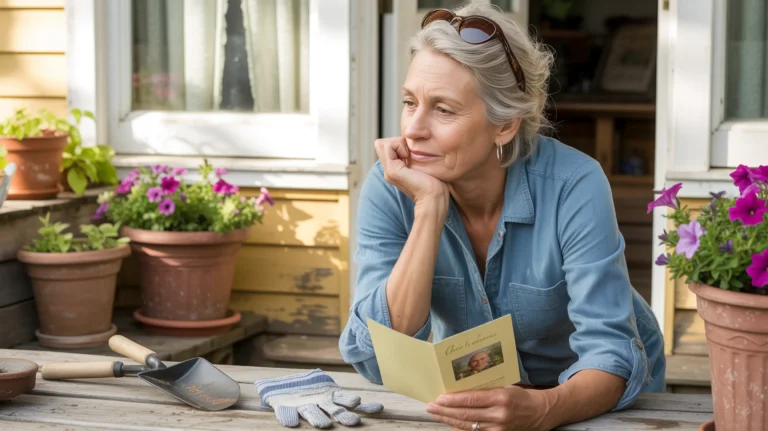
Carol couldn't take on anything new — her mother had moved in and needed round-the-clock attention, her job wasn't flexible, and her husband traveled for work. But she'd started getting up twenty minutes earlier, before the house woke up. She made coffee and she wrote. Nothing grand. Sometimes just the events of the day before, sometimes memories, sometimes pure feeling that didn't have a shape yet. She told herself it wasn't worth anything. She kept doing it anyway. Those twenty minutes were hers in a way that almost nothing else was, and she guarded them quietly. (Sound familiar? A simple daily practice can become an anchor in ways you don't expect until you're deep into it.)

Teresa was the unofficial family coordinator — the one the siblings called, the one who drove her father to appointments and managed his medications and held her own full-time job and raised two kids on the side. When people asked how she was doing, she said fine and changed the subject because there wasn't room in the conversation for anything more honest than that.
What she knew about herself, in the deep quiet place underneath all the doing: she missed cooking. Real cooking, the kind she used to do on Sundays when she had time, not the weeknight scramble of whatever's fast. So she started cooking again on Saturday mornings. Just for herself, sometimes. A recipe she'd been saving. Something that took longer than it should. It sounds small because it was small. But it was also entirely, completely hers — and in the territory of caregiving, entirely yours is not a small thing.
Many of us are lucky enough not to carry the full weight alone. Diane's two sisters took on the heaviest lifting in the final years of their mother's life — the kind of sustained, up-close caregiving that changes you in ways that take years to fully understand. When that season ended for them, the quiet that arrived wasn't just the absence of noise. It was the absence of a role that had organized their days and their identities for longer than they could easily remember.
The Caregiver Action Network describes this period as a kind of dual loss — the loss of the person you cared for, and the loss of your own caregiving identity, which had quietly become the structure of your life. For them, the question wasn't just who am I when I'm not needed — it was who am I after carrying something that heavy. That's a different question, and it deserves its own space and its own answer, and it doesn't arrive on anyone's timeline but yours.
What's true for all of them — Diane building while the chaos swirled, Carol writing before the house woke, Teresa cooking on Saturday mornings, the sisters finding their footing after years of profound giving — is that the rediscovery didn't wait for perfect conditions. And it didn't announce itself. It was quiet, and small, and persistent.
This is the heart of what we call Rediscovery here. Not reinvention, necessarily. Not burning it all down and starting over. Rediscovery. The slow, patient work of remembering and uncovering who you are underneath all the roles — while you're still playing them, and after they've shifted, and in all the complicated territory in between.
It doesn't require that your plate be clear. It requires something smaller and harder than that: a willingness to treat your own inner life as worth tending, even in twenty-minute increments, even when everyone still needs something, even when the coffee is still brewing and the list is already running. Those small resets add up to something real — even when they don't feel like it in the moment.
The question who am I in here? is not a luxury question. It is not something you get to ask only after you've earned it. It belongs to you now, exactly as you are, in the middle of everything.
And it is worth asking.
💚
If this question has been sitting with you — who am I underneath all of this? — you’re not alone.
I’ve pulled together a deeper look at what women in this exact season are experiencing, including the themes that keep coming up again and again.
👉 You can read the full report here:
Explore the Research Report →

Frequently Asked Questions About Rediscovering Yourself After Caregiving
What does “losing yourself in caregiving” actually mean?
It's the gradual process of your own interests, routines, and sense of identity shrinking to make room for someone else's needs. Psychologists call it role engulfment — when caregiving stops being something you do and becomes the primary thing you are. It happens slowly, and most caregivers don't notice how far it's gone until the role shifts or ends.
Can you start rediscovering yourself while you're still caregiving?
Yes — and honestly, waiting until caregiving ends to begin this work makes the transition harder. Small, consistent acts of self-reclamation (a hobby you guard fiercely, twenty minutes of writing before the house wakes, one Saturday morning a week that belongs to you) keep you tethered to yourself even in the middle of the most demanding seasons.
Is it normal to feel guilty about focusing on myself after caregiving?
Extremely normal — and well-documented. Many former caregivers describe a version of survivor's guilt or feel that self-care betrays the memory of the person they cared for. It's a real and valid feeling that deserves to be named. It's also worth gently questioning: would the person you cared for want this for you?
How long does it take to find yourself again after caregiving ends?
There is no set timeline, and anyone who offers you one is guessing. What most caregivers describe is a non-linear process — some days feeling like yourself again, others feeling groundless. The thread throughout rediscovering yourself after caregiving is self-compassion and staying curious. Give yourself the same patience you gave to the person in your care.
This post is part of our Rediscovery series. If this resonates with you, we'd love to hear what small acts of self-reclamation you've held onto — or are just beginning to try. Drop a note in the comments or come find us in the community. The Thrive Hive community is built for exactly this — women in the middle of transition who need both practical tools and the comfort of knowing they're not alone.
Free Download
Get the Rise & Reset Journal
FreePlus weekly stories, resources, and gentle guidance for life's toughest transitions.
✦ Yes, Send Me the Journal + Weekly SupportUnsubscribe anytime. Your inbox deserves kindness too.