How I Started Healing Grief After Losing My Mother — One Stitch at a Time
The dress kept getting picked up and put back down.
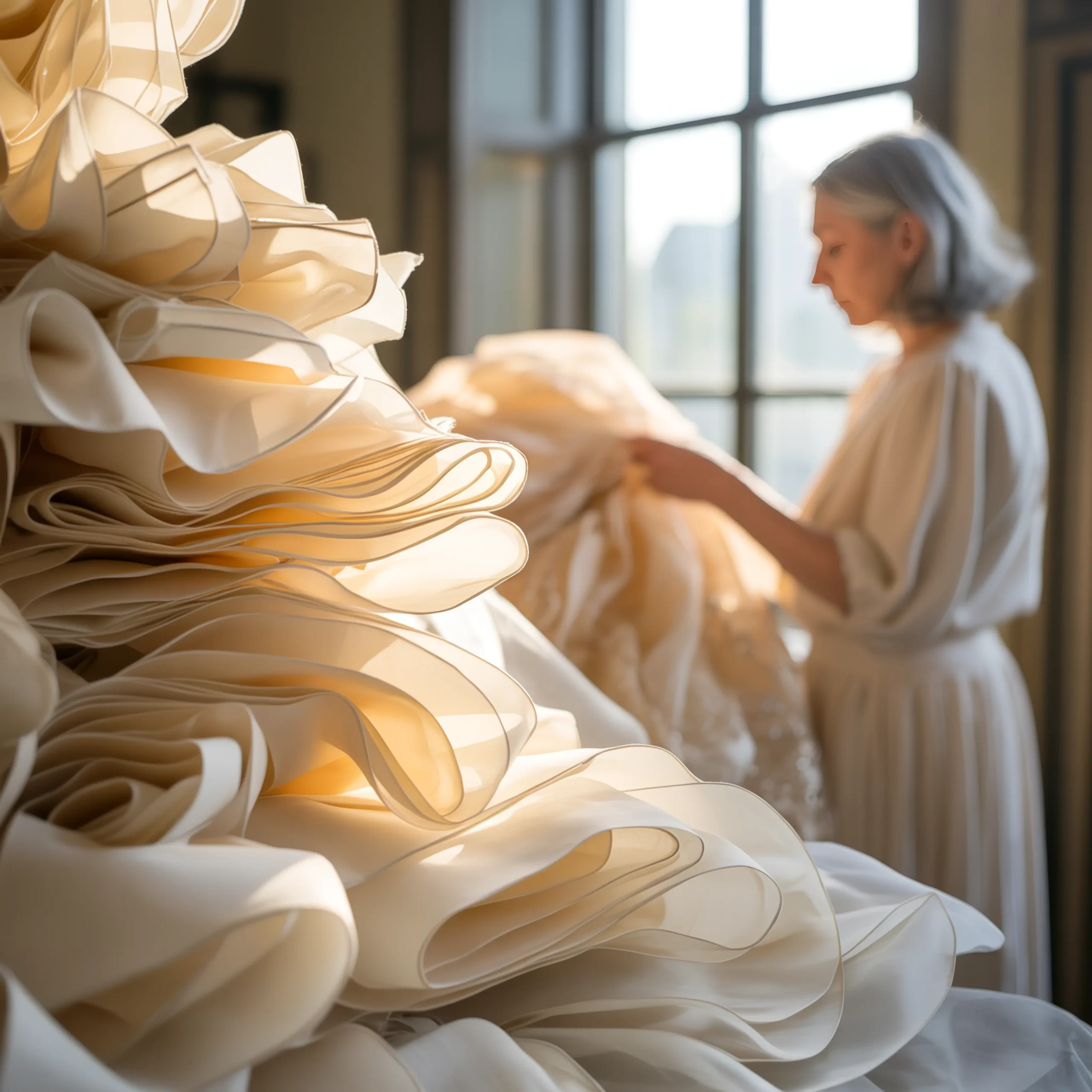
Someone would lift it from the pile of things that had no home — organza over taffeta, delicate ruffles down the back, the fabric still impossibly pristine after nearly 75 years — and for a moment you could almost see her in it. Then reality would settle back in, and back it would go. That is what healing grief after losing your mother so often looks like — not a single moment of release, but a slow, patient circling back.
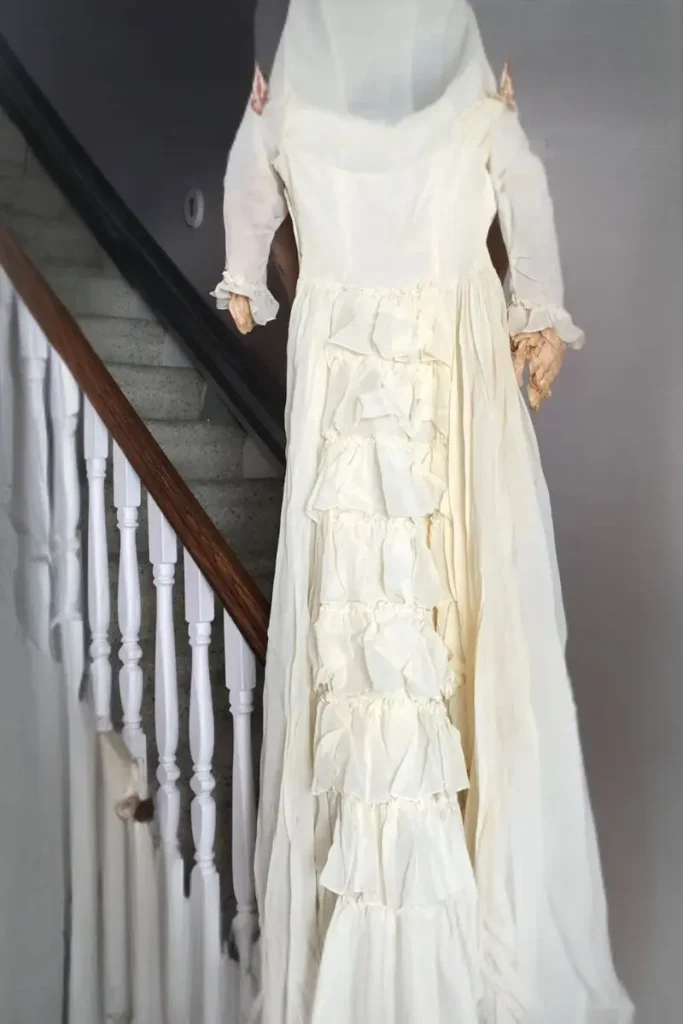
We all took a turn at that dance, my sisters and I. There was no space for it. There was nowhere to put it. And yet not one of us could be the one who let it go.
I grabbed it and ran.
⬦ ⬦ ⬦
The Weight We Carry Home
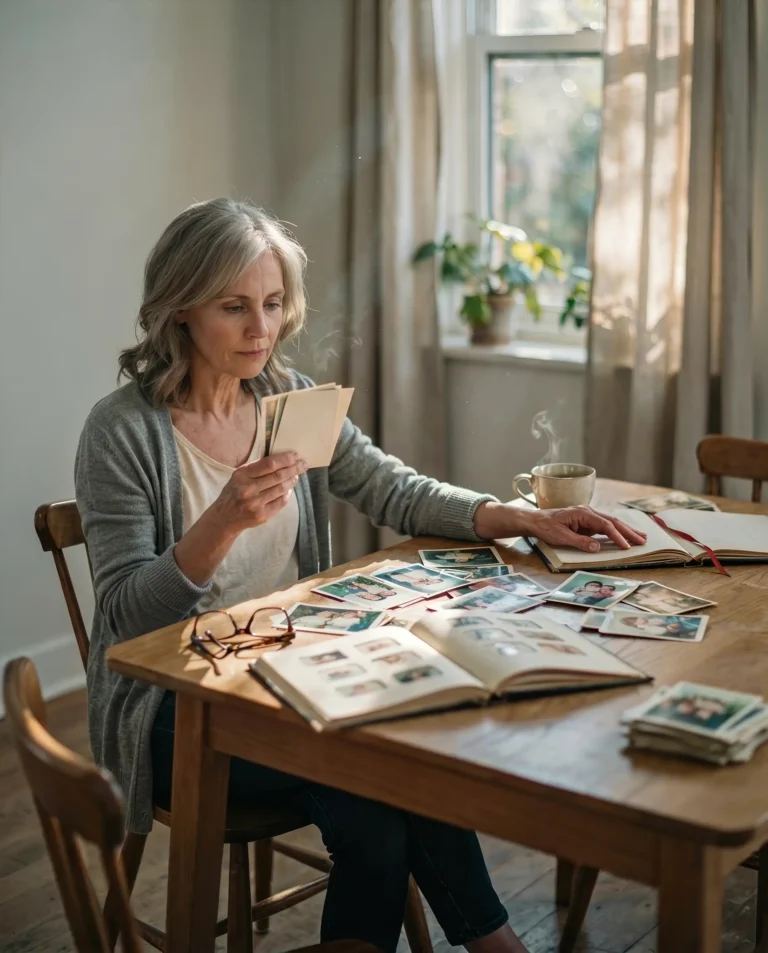
My mother passed in April of 2020, eleven weeks shy of her hundredth birthday. The world was already turned sideways, and then there was this: the impossible task of emptying a house full of nearly a century's worth of living.
Grief does something interesting to time. It slows down in the middle of a room full of her things and then speeds up the moment you are not paying attention. We made games out of the decisions because there were too many to bear with a straight face. We laughed until we cried and cried until we laughed, because that is what she taught us.
When I brought the dress home, I had no plan. I just knew I could not be the person who let it go to the pile. It sat in a drawer for the better part of a year before I understood what it needed to become.
Grief is not the opposite of love. It is love, looking for somewhere to land.
The Undoing
I am not a seamstress. My mother was — quietly, brilliantly, and always without taking credit for it. My sisters inherited that gift. I did not. Which made what I did next both ridiculous and entirely right.
I deconstructed the dress by hand. Slowly. I separated the skirt from the bodice and felt brutal doing it. The sleeves hung waiting for their freedom. I cried at every seam I opened, following hidden seams sewn by hands I would never know, teasing apart the careful work of someone who had dressed a young bride who had every reason in the world to believe the best was still ahead of her.
Misty eyes made it hard to see. Heaving sobs brought me to a standstill, time and again. And yet I kept coming back, because that is what she taught me to do. Keep coming back.
If you are somewhere in the middle of that kind of grief — the kind that does not announce itself neatly but shows up in a drawer, a scent, a song on the radio — take our free reflection Where Are You In Your Becoming?. Eight questions, two minutes, no wrong answers. It meets you exactly where you are and points you toward what might actually help.
The Making
After days of starts and stops, when the dress was finally undone, something shifted. I took a deep breath, held it, and picked up my blade.

Instead of pain, I found energy. It was quick and clean to cut through the layers — creating slim columns of fabric, building piles of gauzy organza and shimmering taffeta. As I measured and sorted, I felt something I had not expected: connection. Not to the grief, but to her. To the young woman who had worn this dress and stood at the beginning of a life she could only dream about.
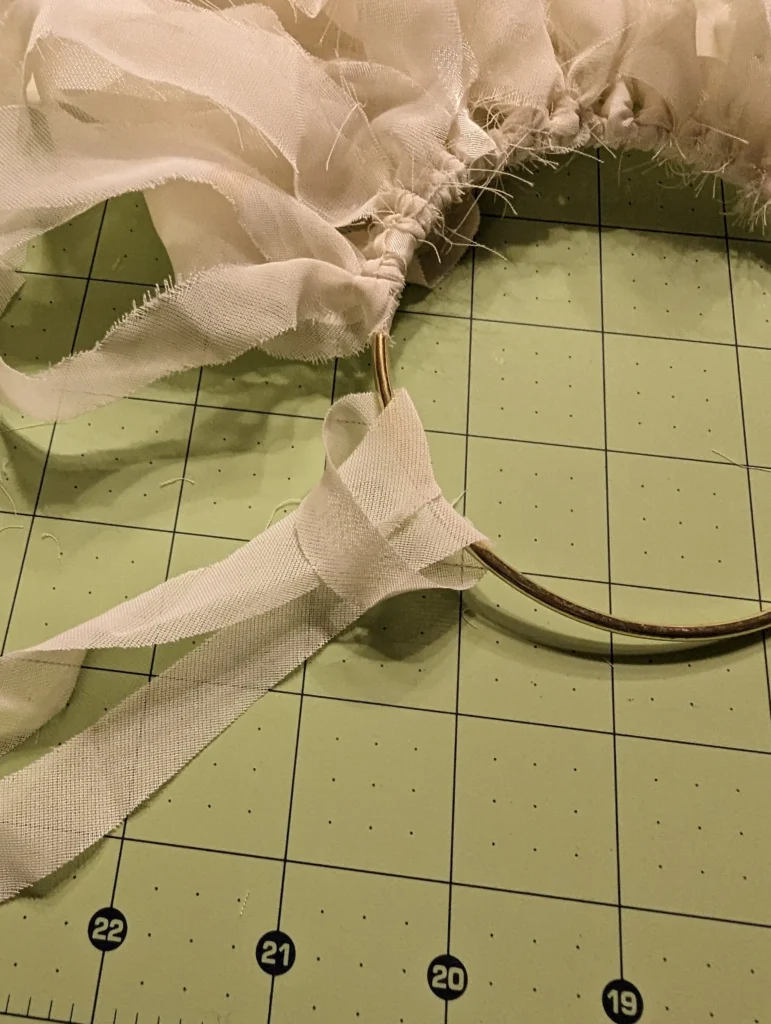
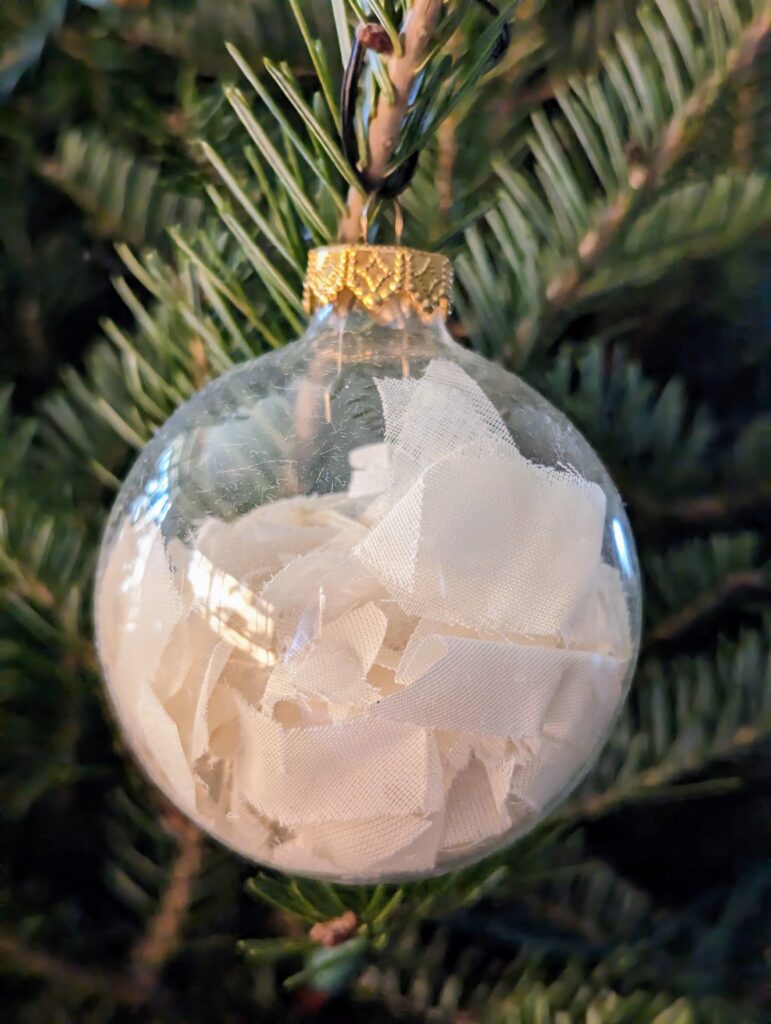
I had been thinking about circles. My siblings and I — five of us — have always been the five fingers of our parents' sheltering hands. Separate, yet belonging to the same thing. I used gold rings and knotted clusters of organza and taffeta between them, one knot for each of us. I made ornaments: some for my siblings, some for our children. The remaining strips went into clear glass globes that look, somehow, like captured snowfall.
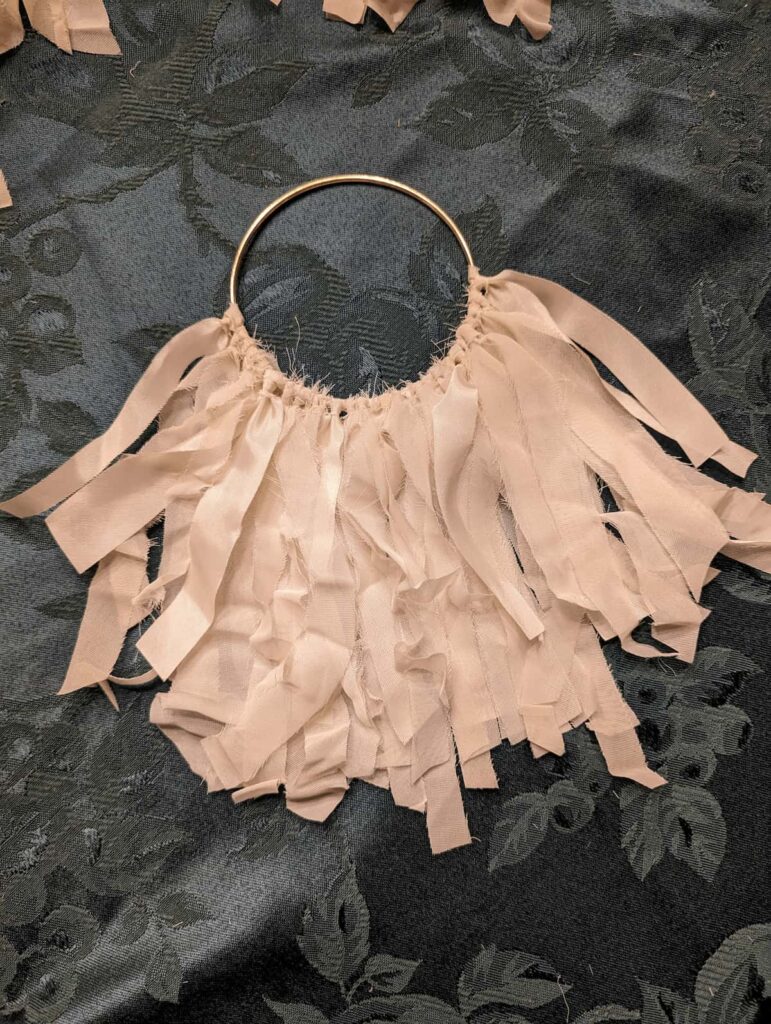
I have always believed those who shaped my life live on in my heart. I just didn't understand the depth of that love until I let go of the pain.
If this resonates, you might also find comfort in exploring how to build resilience through the hard seasons — our free resources page is a gentle place to start. And if you're carrying something heavy right now and aren't sure where to begin, start here — we will meet you where you are.
Research on grief and meaning-making from Psychology Today confirms what many of us already know in our bones: creative acts of remembrance are one of the most powerful ways we have of transforming loss into something we can carry.
⬦ ⬦ ⬦
The dress is gone now, in the way that matters. It is not sitting in a drawer, waiting for a decision I can't make. It is in the hands of people who loved her — hanging on a tree, catching the light, spinning slowly in a glass globe.
You do not have to let go all at once. You do not have to have a plan. Sometimes you just grab the dress and run, and figure out the rest when you get there.
If you are in the middle of your own kind of letting go, come find us in The Thrive Hive. We are very good at sitting with the hard stuff — and very good at finding the light on the other side of it. ☕💚
⬦ ⬦ ⬦
You're Not the Only One Asking
These are some of the questions we hear most from women navigating grief and loss.
How do I start healing grief after losing my mother?
There is no single path through grief, and that is actually good news — it means you cannot do it wrong. Many women find that honoring their mother in a tangible, creative way helps bridge the space between loss and remembrance. The key is giving yourself permission to move at your own pace, and to let grief look however it actually looks rather than however you think it should.
Is it normal to feel stuck in grief years after losing a parent?
Completely normal. Grief is not a straight line, and it does not have a finish line. It tends to resurface around anniversaries, milestones, or — sometimes — an ordinary Tuesday when you find something in a drawer. Many women describe grief as coming in waves that change over time: less frequent, perhaps, but still real. Giving yourself space to feel it, rather than rushing past it, is one of the most effective things you can do.
Can creative projects really help with grief?
Yes — and research backs this up. Creative acts of remembrance, whether sewing, writing, painting, or any other form of making, can help transform grief from something we carry alone into something we can share. The process of creating engages both our hands and our hearts, which is exactly what grief often needs.
What does it mean to ‘let go' of someone you love after they die?
Letting go does not mean forgetting or leaving behind. It means releasing the acute pain of absence so that the love has room to live somewhere else — in a story you tell, something you make, or the way you show up for the people still in your life. The person does not go. The love finds a new shape.
How do I know when I'm ready to start grieving differently?
You will probably not know in advance. Most people describe a moment — not planned, not announced — where something shifts. Sometimes it is a pile of fabric, a drawer you finally open, a holiday you decide to approach a different way. Trust that when you are ready, something in you will reach for the next thing. And until then, it is enough to keep coming back.
Free Download
Get the Rise & Reset Journal
FreePlus weekly stories, resources, and gentle guidance for life's toughest transitions.
✦ Yes, Send Me the Journal + Weekly SupportUnsubscribe anytime. Your inbox deserves kindness too.